JOOLA Ben Johns Hyperion CFS 16 Review — The Paddle That Dominates the Pro Circuit
By Charles Reed | Editor in Chief, PickleballInsider.pro
Last Updated: March 2026 | Estimated Reading Time: 9 minutes
Affiliate Disclosure: PickleballInsider.pro participates in affiliate marketing programmes. If you purchase a product through one of our links, we may earn a small commission at no additional cost to you. This never influences our editorial recommendations.
Ben Johns is the most dominant player in the history of professional pickleball. At his peak, he held the world number one ranking simultaneously in singles, doubles, and mixed doubles — an achievement that has no parallel in the sport. When a player of that calibre puts his name on a paddle and uses it to win at the highest level of competition, serious players pay attention.
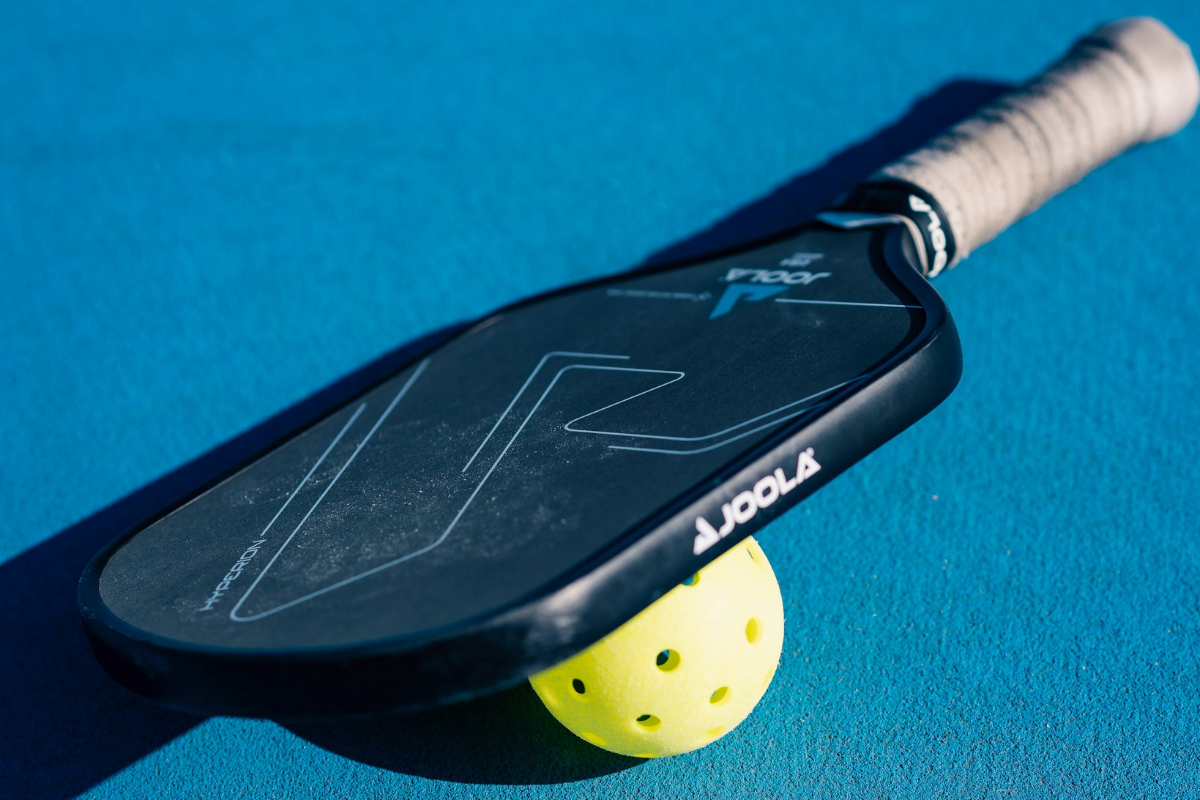
The JOOLA Ben Johns Hyperion CFS 16 is the paddle that has been at the centre of Johns’ professional success, and it has become one of the most widely used and highly regarded paddles in the sport. This review examines whether the Hyperion CFS 16 lives up to its extraordinary reputation — and whether it is the right paddle for you.
JOOLA Ben Johns Hyperion CFS 16: At a Glance
| Specification | Detail |
|---|---|
| Core | Polymer Honeycomb |
| Face | Carbon-Flex5 (CFS) Carbon Fibre |
| Handle | Carbon-forged for maximum flex |
| Core Thickness | 16mm |
| Weight Range | 7.9 – 8.3 oz |
| Grip Circumference | 4 1/4″ |
| Shape | Hybrid |
| Speed Rating | 65/100 |
| Stability Rating | 90/100 |
| Price | ~$250–$280 |
| Best For | All-court players, 3.5 DUPR and above |
The Technology Behind the Paddle
JOOLA’s marketing for the Hyperion CFS 16 centres on two proprietary technologies: the Carbon-Flex5 (CFS) face and the carbon-forged handle. Understanding what these technologies actually do helps explain why this paddle performs the way it does.
Carbon-Flex5 (CFS) Face Technology is JOOLA’s proprietary carbon fibre surface treatment. The CFS face is engineered to be more advanced, durable, and longer-lasting than standard carbon fibre surfaces. The texture of the CFS face is designed to maximise spin generation while maintaining a consistent feel across the entire surface. Independent testing has confirmed that the CFS face delivers excellent spin numbers and maintains its performance characteristics over an extended period of use — a meaningful advantage over some paddles whose surface texture degrades relatively quickly.
Carbon-Forged Handle is a manufacturing process that creates a handle with exceptional flex characteristics. The flex in the handle acts as a shock absorber, reducing the impact transmitted to the player’s wrist and elbow during hard drives and volleys. This has practical benefits for injury prevention, particularly for players who play frequently and are concerned about repetitive strain. The flex also contributes to a slight power boost on aggressive swings, as the handle’s energy return adds to the ball’s exit velocity.
Performance on the Court
Control and Consistency
The Hyperion CFS 16’s most celebrated attribute is its control, and it is immediately apparent on the court. The 16mm core thickness provides a soft, consistent feel that rewards precise shot-making. Dinks land where you intend them to. Third shot drops arc predictably into the kitchen. Reset volleys absorb pace effectively.
The stability rating of 90/100 reflects this control characteristic. The paddle is remarkably stable on off-centre hits — the ball does not deflect significantly even when contact is made toward the edge of the face. This consistency is one of the reasons the Hyperion CFS 16 has become so popular with players who are working on developing their all-court game.
Power
The speed rating of 65/100 is the number that most often surprises players who are new to the Hyperion CFS 16. In a market where foam-core paddles are generating significant power numbers, the CFS 16’s polymer core produces a more measured power output. This is not a criticism — it is a design philosophy. The paddle prioritises control and consistency over raw power, and for players who have developed the technique to generate their own pace, this is exactly the right trade-off.
Players who rely on the paddle to generate power for them — a common characteristic of beginners and lower-intermediate players — may find the CFS 16 less satisfying than a foam-core alternative. Players who have developed a technically sound swing and want a paddle that rewards precision will find the power output entirely adequate.
Spin Generation
The CFS face delivers excellent spin generation. The textured carbon fibre surface grips the ball effectively, allowing players to impart significant topspin on drives and slice on dinks and drops. The spin numbers are not quite at the level of specialist spin paddles like the RPM Friction Pro, but they are among the best available from an all-court paddle.
Kitchen Line Performance
The Hyperion CFS 16 excels at the kitchen line — arguably the most important area of the court in competitive pickleball. The 16mm core’s soft feel and the handle’s flex characteristics combine to create a paddle that is exceptionally well-suited to the touch shots, resets, and quick hands exchanges that define kitchen line play.
Ben Johns himself has spoken about the importance of kitchen line dominance in his game, and the Hyperion CFS 16’s design clearly reflects this priority. Players who want to develop a strong kitchen game will find this paddle an excellent tool for that purpose.
Who Is the Hyperion CFS 16 Best For?
The JOOLA Ben Johns Hyperion CFS 16 is best suited to players at the 3.5 DUPR level and above who have developed a technically sound game and are looking for a paddle that rewards precision and all-court consistency.
It is an excellent choice for players who:
- Prioritise control and consistency over raw power
- Are working on developing a strong kitchen game and soft shot repertoire
- Have a technically sound swing and can generate their own pace
- Play an all-court game and need a paddle that performs well in every situation
- Are concerned about elbow or wrist comfort and want a paddle with good shock absorption
It is less ideal for players who:
- Are below the 3.0 DUPR level and still developing their technique
- Rely on the paddle to generate power rather than generating it themselves
- Are looking for the maximum power output available in the market
- Are on a tight budget — at $250–$280, this is a premium investment
The Ben Johns Factor
It would be disingenuous to review this paddle without addressing the “Ben Johns effect” directly. When the world’s best player uses a paddle, it creates a halo effect that can inflate perceptions of the paddle’s performance. Is the Hyperion CFS 16 genuinely as good as its reputation suggests, or is it benefiting from its association with the sport’s greatest player?
The honest answer is that the paddle is genuinely excellent — but it is excellent in a specific way that may not suit every player. Ben Johns’ game is built on extraordinary control, precision, and kitchen line dominance. The Hyperion CFS 16 is optimised for exactly those attributes. If your game shares those priorities, this paddle will serve you exceptionally well. If your game is built around power and aggression, there are better options available.
How It Compares to the Competition
| Paddle | Price | Control | Power | Spin | Stability | Best For |
|---|---|---|---|---|---|---|
| JOOLA Hyperion CFS 16 | ~$260 | 9.5/10 | 6.5/10 | 8.5/10 | 9/10 | Control/all-court 3.5+ |
| Selkirk Vanguard Power Air | ~$230 | 7/10 | 9/10 | 9/10 | 7.5/10 | Power/spin 3.5+ |
| Holbrook Fuze | ~$195 | 10/10 | 10/10 | 8/10 | 8.5/10 | Aggressive all-court 3.5+ |
| Honolulu J2NF | ~$175 | 8.5/10 | 8/10 | 8/10 | 9.5/10 | All levels, best value |
| Bread & Butter Loco | ~$179 | 8.5/10 | 8.5/10 | 8.5/10 | 8.5/10 | Intermediate upgrade |
The Hyperion CFS 16 leads this comparison on control and stability — the attributes that matter most for kitchen line play and all-court consistency. It trails on power, which is the deliberate trade-off of its design philosophy.
Pros and Cons
What We Love:
- Exceptional control and consistency — the best on this list
- Outstanding kitchen line performance
- Excellent stability on off-centre hits
- Carbon-forged handle provides good shock absorption
- CFS face technology delivers durable, consistent spin generation
- Association with the sport’s greatest player is a genuine quality signal
What Could Be Better:
- Power output is below average for a paddle at this price point
- Premium price of $250–$280 is a significant investment
- Less suitable for players who prioritise power over control
- Polymer core may feel less dynamic than foam-core alternatives for some players
The Verdict
Rating: 9.0/10
The JOOLA Ben Johns Hyperion CFS 16 is one of the finest control paddles available in 2026. Its combination of exceptional stability, outstanding kitchen line performance, and durable CFS face technology makes it a genuinely excellent choice for players who prioritise precision and all-court consistency.
The caveat is clear: this paddle is designed for players who have developed the technique to exploit its control characteristics. In the hands of a 3.5+ player with a technically sound game, it is a formidable tool. In the hands of a beginner or lower-intermediate player who needs the paddle to generate power, it will feel underwhelming.
If you are a control-focused player at the 3.5 level or above who wants a paddle that will reward your precision and support your kitchen game, the Hyperion CFS 16 is an outstanding choice.
Check Current Price at JOOLA →
Check Price at Pickleball Central →
Frequently Asked Questions
Is the JOOLA Hyperion CFS 16 good for beginners?
No. The Hyperion CFS 16 is designed for intermediate to advanced players who have developed a technically sound game. Beginners would be better served by a more forgiving, power-friendly paddle such as the Vatic Pro V-SOL Pro or the Honolulu Sword & Shield J2NF.
What is the difference between the CFS 16 and the CAS 16?
The CFS (Carbon-Flex5) version uses JOOLA’s premium carbon fibre face technology. The CAS (Carbon-Aero Surface) version uses a slightly different surface treatment that produces a more aggressive, faster feel. The CFS 16 is generally considered the better all-court performer; the CAS 16 is preferred by players who want a faster, more aggressive response.
Does the carbon-forged handle really make a difference for elbow comfort?
Many players report that the handle’s flex characteristics do reduce the impact transmitted to the elbow during hard drives. While individual results vary, the engineering rationale is sound, and the anecdotal evidence from the pickleball community is broadly positive. Players with existing elbow issues should still consult a medical professional, but the Hyperion CFS 16 is generally considered one of the more elbow-friendly paddles at the premium level.
How long does the CFS face maintain its texture?
JOOLA claims the CFS face is more durable than standard carbon fibre surfaces, and independent testing broadly supports this claim. With regular play, the face should maintain its performance characteristics for 12 to 18 months before showing meaningful degradation.
Charles Reed is the Editor in Chief of PickleballInsider.pro. He has been playing pickleball for approximately one year, holds a DUPR rating of 3.5, and plays primarily on outdoor courts.
Related Articles: