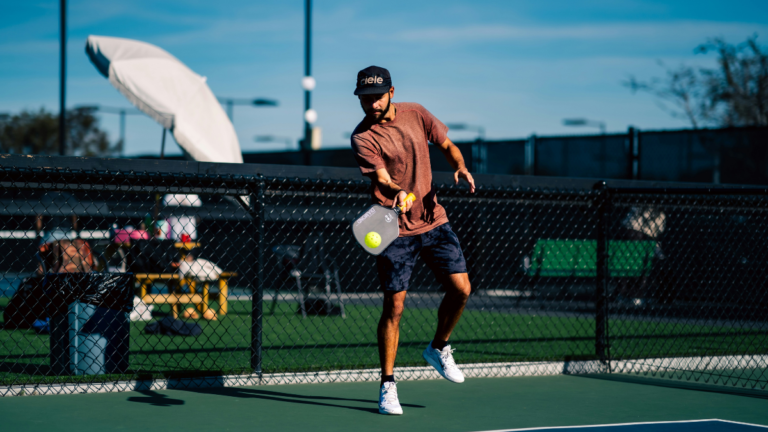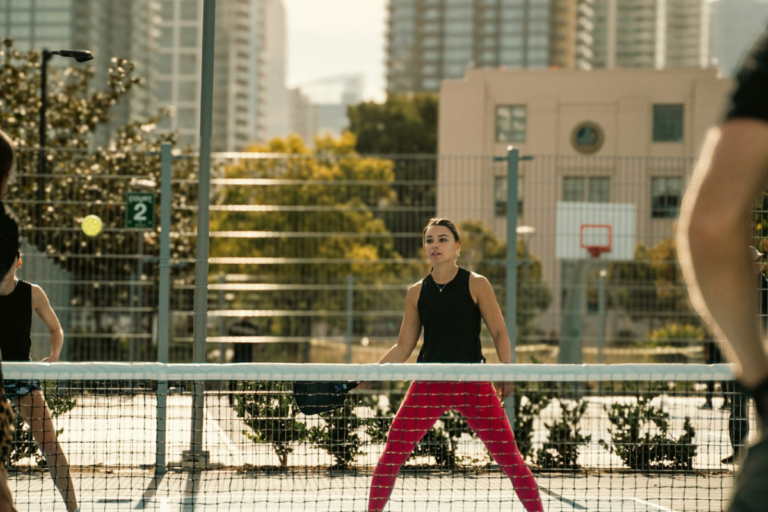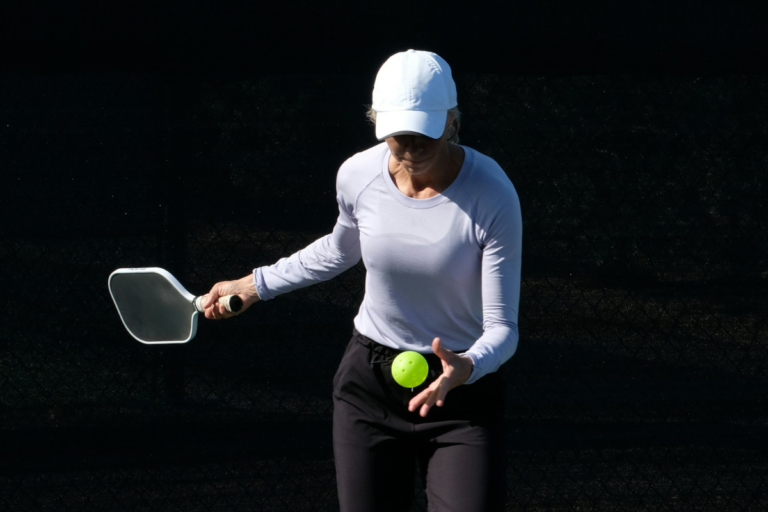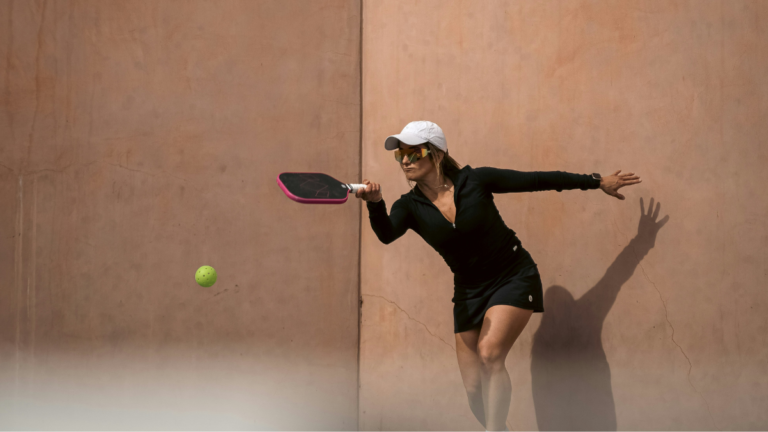
The Complete Beginner’s Guide to Pickleball — Everything You Need to Know Before You Play
By Charles Reed | Editor in Chief, PickleballInsider.pro
Last Updated: March 2026 | Estimated Reading Time: 12 minutes
Affiliate Disclosure: PickleballInsider.pro participates in affiliate marketing programmes. If you purchase a product through one of our links, we may earn a small commission at no additional cost to you. This never influences our editorial recommendations.
When I first picked up a pickleball paddle about a year ago, I had no idea what I was getting myself into. A colleague mentioned it at work, I showed up to my local outdoor courts one Saturday morning with borrowed gear, and within an hour I was completely hooked. The game is fast, social, genuinely challenging, and — unlike tennis or golf — remarkably accessible from the very first session.
A year later, I am playing at a DUPR rating of 3.5, I have invested in my own equipment, and I spend more time thinking about pickleball than I probably should for someone with a busy professional schedule. What I wish I had when I started was a single, comprehensive guide that explained everything clearly without talking down to me or burying the important information in unnecessary filler.
This is that guide. By the time you finish reading, you will understand the game completely — the rules, the equipment, the court, the scoring, and the strategies that will help you improve faster than most beginners do.
What Is Pickleball?
Pickleball is a paddle sport that combines elements of tennis, badminton, and table tennis. It is played on a court roughly the size of a badminton doubles court — significantly smaller than a tennis court — using solid paddles and a lightweight, perforated plastic ball similar to a wiffle ball.
The sport was invented in 1965 on Bainbridge Island, Washington, by Joel Pritchard, Bill Bell, and Barney McCallum, who were looking for a game the whole family could play together. From those humble origins, pickleball has grown into the fastest-growing sport in the United States and is rapidly expanding across Australia, Europe, and Asia.
What makes pickleball uniquely appealing is its accessibility. The smaller court size means less ground to cover. The lighter ball moves more slowly than a tennis ball, giving players more time to react. The underhand serve removes the intimidating power element that makes tennis serving so difficult for beginners. Yet the game rewards skill, strategy, and athleticism at the highest levels — professional players earn significant prize money on a growing international tour.
The Pickleball Court
Understanding the court layout is essential before you play your first game. The pickleball court is 44 feet long and 20 feet wide — the same dimensions as a doubles badminton court. It is divided by a net that stands 36 inches high at the sidelines and 34 inches at the centre.
The court is divided into several distinct zones, each of which plays an important role in the strategy of the game:
The Baseline runs along the back of the court on each side. Serves are hit from behind the baseline, and much of the early part of each rally takes place with players near the baseline before they advance to the kitchen.
The Service Areas are the two rectangular boxes on each side of the court, separated by the centreline. Each service box is 15 feet deep and 10 feet wide.
The Non-Volley Zone (The Kitchen) is the most strategically important area of the court. It is a 7-foot zone on each side of the net where players are not permitted to volley the ball — that is, hit it out of the air without letting it bounce first. The kitchen is the defining feature of pickleball strategy. Mastering play at the kitchen line is what separates good players from great ones.
| Court Zone | Dimensions | Key Rule |
|---|---|---|
| Full Court | 44 ft × 20 ft | Standard play area |
| Non-Volley Zone (Kitchen) | 7 ft from net × 20 ft wide | No volleying allowed |
| Service Box (each) | 15 ft × 10 ft | Serve must land here |
| Net Height (centre) | 34 inches | Ball must clear net |
| Net Height (sidelines) | 36 inches | Ball must clear net |
The Equipment You Need
One of the great advantages of pickleball is that the equipment requirements are minimal and relatively affordable compared to sports like golf or tennis.
The Paddle is the most important piece of equipment and the one worth investing in thoughtfully. Pickleball paddles are solid — unlike the strung racquets used in tennis or badminton — and are made from a variety of materials including wood (entry-level), composite (mid-range), and carbon fibre or fibreglass (premium). For a complete guide to choosing the right paddle, see our Paddle Buyer’s Guide.
The Ball is a lightweight, hollow plastic sphere with holes drilled through it — similar in appearance to a wiffle ball but manufactured to strict specifications. Outdoor balls have smaller, more numerous holes and are slightly heavier and harder than indoor balls, which are designed for smooth gym floors. As someone who plays primarily on outdoor courts, I use the Franklin X-40, which is the official ball of the US Open Pickleball Championships and performs consistently well on hard outdoor surfaces.
Footwear is more important than most beginners realise. Court shoes — designed specifically for the lateral movements required in racquet sports — provide the ankle support and grip that running shoes do not. Playing pickleball in running shoes significantly increases your risk of ankle injury. Invest in a proper pair of court shoes before you start playing regularly.
Optional Equipment includes items like paddle covers, grip tape, court bags, and sun protection for outdoor play. These are not essential to start but become worthwhile investments as you play more frequently.
The Basic Rules of Pickleball
Pickleball’s rules are straightforward once you understand the core concepts. Here is a clear overview of everything you need to know to play your first game.
Serving
The serve in pickleball is always underhand. The paddle must make contact with the ball below the waist, and the paddle head must be below the wrist at the point of contact. The serve is hit diagonally across the court into the opposite service box — the same pattern as in tennis.
The serve must clear the non-volley zone (kitchen) and land in the correct service box. If the serve lands in the kitchen or misses the service box, it is a fault and the serve passes to the opponent (in singles) or the second server (in doubles).
There is one important rule specific to pickleball: if the serve touches the net and lands in the correct service box, it is replayed — there is no “let” rule that results in a fault.
The Two-Bounce Rule
This is the rule that most distinguishes pickleball from other racquet sports and is essential to understand. After the serve, the ball must bounce once on the receiving side before it can be returned. Then, the return must bounce once on the serving side before the serving team can play it. Only after these two bounces have occurred can either team begin volleying the ball out of the air.
This rule prevents the serving team from immediately rushing the net and volleying, which creates a fairer and more strategic game. It means that the first two shots of every rally — the serve and the return — must be groundstrokes, not volleys.
The Non-Volley Zone Rules
No player may volley the ball while standing in the kitchen or while their momentum carries them into the kitchen after a volley. This rule applies even if the ball bounces in the kitchen — you may step into the kitchen to play a ball that has bounced there, but you must re-establish both feet outside the kitchen before volleying again.
This rule is the source of most of the strategic depth in pickleball. The best players spend most of each rally positioned at the kitchen line, where they can control the pace of the game and create opportunities with soft, angled shots.
Scoring
Pickleball uses a unique scoring system that differs from most other sports. Points can only be scored by the serving team. If the receiving team wins a rally, they do not score a point — they simply win the serve.
In doubles, each team has two serves per rotation (one for each player), except at the very start of the game when the first serving team begins with only one serve. This is called the “second server start” rule and is designed to prevent the serving team from having too large an advantage at the beginning of the game.
Games are typically played to 11 points, and a team must win by 2 points. Tournament games are sometimes played to 15 or 21 points.
The score is always called as three numbers in doubles: the serving team’s score, the receiving team’s score, and the server number (1 or 2). For example, “4-2-1” means the serving team has 4 points, the receiving team has 2 points, and the first server is serving.
The Four Core Shots
Becoming a competent pickleball player requires mastering four fundamental shots. Each one has a specific strategic purpose, and developing all four is essential for playing a complete game.
The Serve initiates every rally and sets the tone for the point. A good serve is deep, consistent, and placed to the opponent’s weaker side. Beginners should focus on consistency — getting the serve in reliably — before worrying about placement or power.
The Return of Serve is arguably the most important shot in pickleball. A deep, well-placed return gives the returning team time to advance to the kitchen line, which is where points are won. A short or weak return allows the serving team to attack. As a beginner, focus on hitting the return deep and moving immediately toward the kitchen after hitting it.
The Third Shot Drop is the shot that separates beginners from intermediate players. After the serve and the return, the serving team faces a challenging situation: they are at the baseline while the returning team has advanced to the kitchen. The third shot drop is a soft, arcing shot designed to land in the kitchen and force the opposing team to hit upward, preventing them from attacking. Mastering this shot is the single most important step in improving from a 2.5 to a 3.5 DUPR rating.
The Dink is a soft, controlled shot played from near the kitchen line, designed to land in the opponent’s kitchen. Dink rallies — extended exchanges of soft shots at the kitchen line — are the defining feature of high-level pickleball. The player who can sustain a dink rally patiently and then recognise and attack the right ball wins the point. Learning to dink well requires patience and touch, but it is the foundation of advanced play.
Strategy for Beginners
Understanding a few core strategic principles will help you improve much faster than simply playing more games without direction.
Get to the Kitchen. The most important strategic principle in pickleball is to advance to the kitchen line as quickly as possible. Players at the kitchen line control the game. They can attack balls that sit up, defend with soft dinks, and create angles that players at the baseline cannot. Every rally should be approached with the goal of reaching the kitchen line.
Keep the Ball Deep. Whether you are serving, returning, or hitting a groundstroke from the baseline, keeping the ball deep — close to your opponent’s baseline — prevents them from attacking and gives you time to advance. Short balls invite attacks.
Be Patient in Dink Rallies. Beginners often try to end dink rallies too quickly by attacking balls that are not truly attackable. This leads to errors. The correct approach is to dink patiently until your opponent gives you a ball that sits up above the net — then attack with purpose.
Communicate with Your Partner. In doubles, communication is essential. Call “mine” or “yours” on balls that fall between partners. Discuss strategy between points. Move together as a unit — when one player moves left, the other should move left to maintain court coverage.
How to Find Courts and Players
One of the best things about pickleball’s rapid growth is that courts are now genuinely easy to find in most cities. Outdoor public courts — like the ones at my local playground where I do most of my playing — are often free and available during daylight hours. Many tennis facilities have converted courts or added dedicated pickleball courts. Recreation centres, gyms, and community clubs increasingly offer organised pickleball sessions.
The Pickleheads app and website is an excellent resource for finding courts and open play sessions near you. USA Pickleball (in the United States) and Pickleball Australia maintain directories of registered clubs and facilities. Most clubs welcome beginners warmly — the pickleball community is notably friendly and inclusive compared to many other sports.
Your First Steps
If you are ready to start playing, here is a simple action plan:
The first step is to find a court near you and show up to an open play session. Most open play sessions welcome complete beginners, and experienced players are generally happy to explain the rules and play a few points with newcomers. You do not need your own equipment to start — borrowing a paddle for your first session is perfectly fine.
Once you have decided you enjoy the game, invest in a proper pair of court shoes and a beginner paddle. The Vatic Pro V-SOL Pro at under $100 is an excellent first paddle that will support your development without requiring a large financial commitment. See our Best Pickleball Paddles guide for a full breakdown of options at every price point.
Finally, commit to learning the third shot drop. It is the shot that will unlock the next level of your game faster than anything else. Watch instructional videos, practice it deliberately, and be patient — it takes time to develop the touch required, but the improvement it brings to your game is transformative.
Final Thoughts
Pickleball is one of the most rewarding sports I have encountered. The learning curve is gentle enough that you can have genuine fun from your very first session, yet the game has enough depth and complexity to keep you engaged and improving for years. At a DUPR rating of 3.5 after one year of play, I am still very much on the learning journey — and I am thoroughly enjoying every step of it.
Whether you are a complete beginner or someone returning to racquet sports after years away, pickleball offers something genuinely special: a game that is easy to start, difficult to master, and endlessly enjoyable in between.
Welcome to the sport. See you on the court.
Charles Reed is the Editor in Chief of PickleballInsider.pro. He has been playing pickleball for approximately one year, holds a DUPR rating of 3.5, and plays primarily on outdoor courts.
Related Articles: